

What Are Sundials? From Stonehenge to Today’s Gardens: A Beginner’s Guide to Discovering Time and the Mechanics of the Heavens
Nowadays, we are so accustomed to reading the time from digital displays that structure our daily routines that some people even struggle to read analogue clock faces with their two hands. And yet it has not been all that long since time was indicated on the dials of sundials by the shadow of the gnomon, moving like a hand under the Sun’s apparent motion. The use of sundials got lost in the mists of time, and nowadays finely crafted sundials are making a comeback—not so much for their remarkable accuracy, but rather for their ability to reveal the extraordinary charm of celestial mechanics, lending prestige to any setting.

Origins, History and Functioning of Sundials
Sundials and similar instruments are found in all cultures across every continent. The origin of Western sundials remains a topic of debate, with claims attributing it to both Mesopotamia and Egypt. Certain methods and instruments for measuring time—essentially the first sundials, already in use around 1500 BC in Mesopotamia and Egypt—were later refined by the Greeks and subsequently spread throughout the Roman Empire. It is believed that the first solar clock used in Rome arrived in the capital after being taken from Catania as spoils of war in 263 BC.
The instrument, however, did not indicate the hours correctly, since Catania lies 5° south of Rome, resulting in different measurements. Pliny tells us that it took 99 years before anyone realised the discrepancy and decided to construct a solar clock designed specifically for Rome.

The Hour System: From Its Origins to “Serial” Sundials
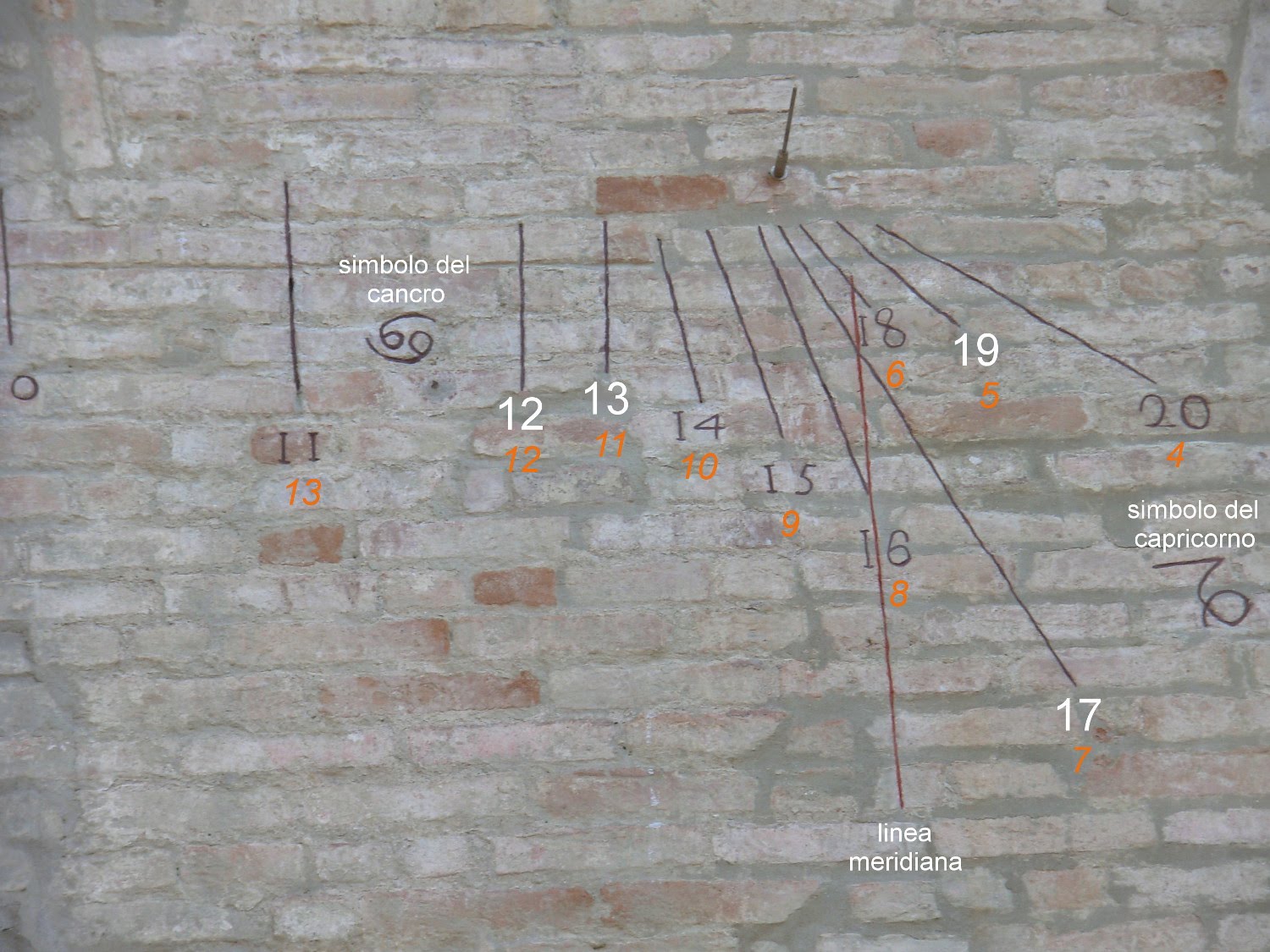
The hour system used in these early solar clocks went by several names: biblical or Judaic (as this ancient system was used in the Bible to mark time); canonical hours or Benedictine hours (as it regulated prayer times in monasteries); and temporary hours. This system divided the night into 12 parts and the day into another 12: the first began at sunrise and the twelfth ended at sunset, both in summer and winter.
Consequently, daytime hours were longer in summer and shorter in winter, and the opposite applied to nighttime hours. This variation was minimal and negligible in the low Middle Eastern latitudes where the system originated, but became more significant when it spread further north. For this reason, these hours were also known as “unequal hours”.


Around the year 1200, other timekeeping systems appeared, featuring 24 daily hours of 60 minutes each. In the Italian peninsula, the Italian hour system was extremely widespread. Following biblical tradition, it set the beginning and end of the day (i.e. the 24th hour) at sunset, both in winter and in summer, keeping pace each day with the exact moment of sunset throughout the seasons. This system, which may seem rather peculiar today, allowed people to know how many hours of daylight remained before darkness—an immensely important piece of information for a society still virtually without artificial light and dependent on the natural rhythms of day and night.
The rest of Europe used the system of astronomical hours, which divided the day into twenty-four hours, placing the beginning and end of the day at midnight—that is, twelve hours after the Sun’s transit across the meridian. In practice, this is the same system used today, refined through mean time corrections and adapted to time zones. From the 19th century onwards—first with the increased reliability of mechanical clocks, then with the introduction of time zones, followed by the invention of electric lighting—the use of sundials as timekeepers gradually diminished. Unfortunately, sundials had, and still have, an insurmountable “flaw”: to be accurate, they must faithfully correspond to the celestial sphere above them.
This means they must be designed individually for the geographical coordinates of their precise location—an entirely unacceptable “flaw” for an industrial society whose strength lies in standardisation and mass production. Since sundials cannot be mass-produced, manufacturers instead chose to replicate only their appearance—producing sundial images in series, perhaps “adjusting” the gnomon (the rod that casts the shadow on the dial), while neglecting to mention that changes in latitude alter the layout of the dial, not to mention differences in longitude. In practice, most sundials available on the market—ready-made and easy to install—are purely decorative objects that work everywhere because they work correctly nowhere.
Personally, I consider this “flaw” to be the sundial’s greatest strength, as its uniqueness unequivocally certifies a bespoke creation. It enhances the value of fine craftsmanship: handmade, one by one. And precisely for this reason, they can be customised in every aspect—dimensions, colours, materials, inscriptions, dedications and numerals.
The Sun Not Only to Tell the Time but to Celebrate the Complexity of the Celestial Sphere

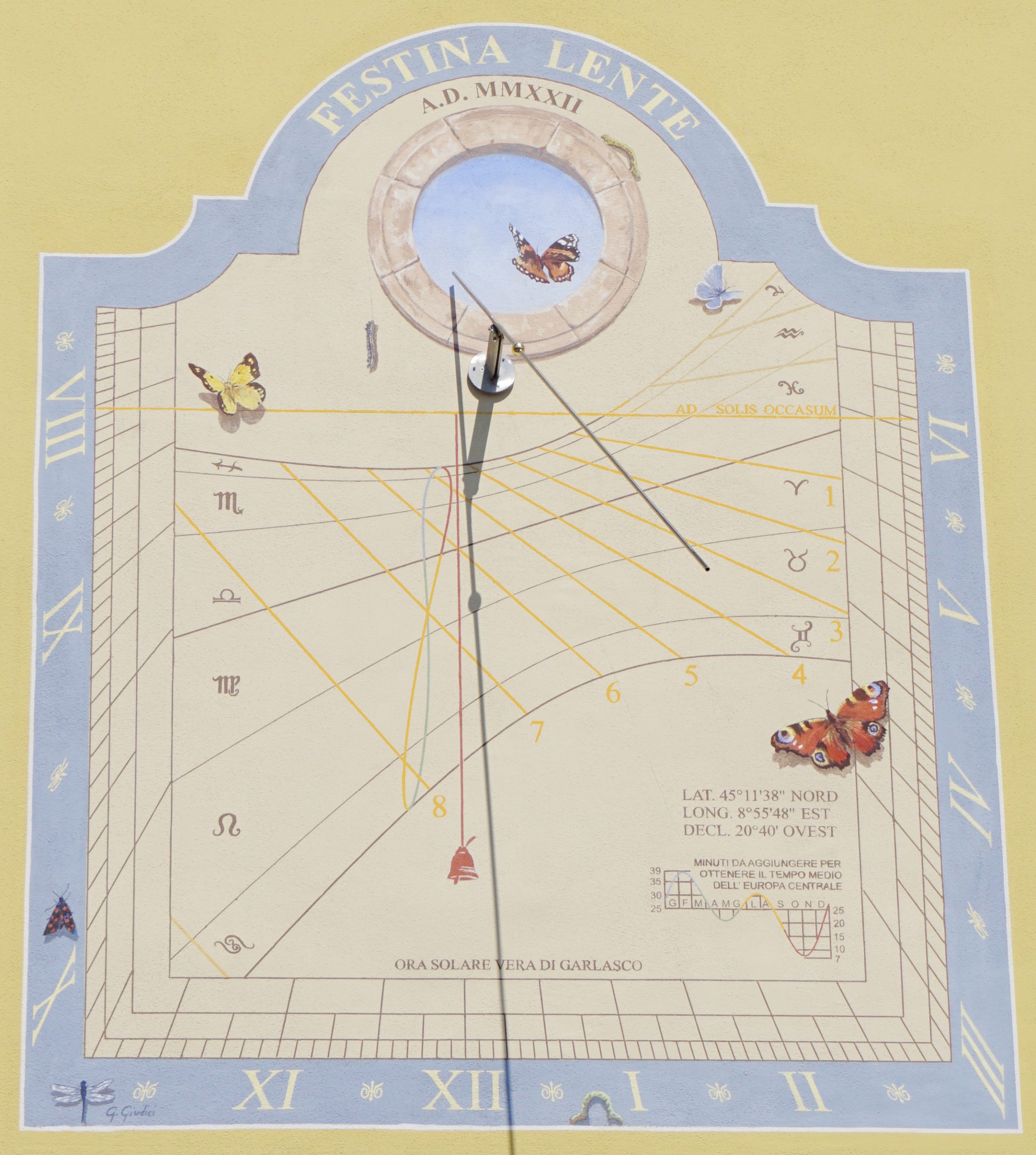
Naturally, the principle behind a sundial is based on the Sun’s apparent movement across the sky, which creates the shadow of the gnomon—usually the raised element above the dial. Throughout the day, this shadow slowly moves across the dial, as if the sundial were a one-handed clock: every one-degree shift of the Sun along the equatorial plane corresponds to four minutes on the sundial. This movement of the shadow is used in some sundials to indicate only the hours, while in others—more elaborate ones that also consider the Sun’s varying altitude across the seasons—it is used to display a range of other time systems, astronomical or civil calendars, and even commemorative lines for those wishing to mark birthdays or anniversaries, as well as several other astronomical indications.

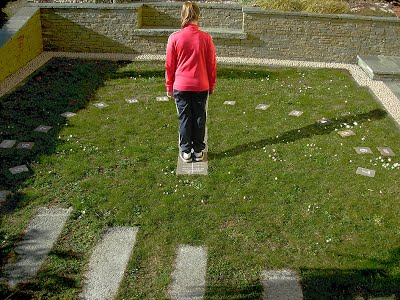
Alongside wall-mounted sundials, the richness of these instruments developed over the centuries into an extraordinary variety of garden installations. A remarkable spread of sundials of every kind occurred in the United Kingdom, as evidenced by the extensive work of description and cataloguing carried out in The Book of Sun-Dials, published in 1872 by Mrs Alfred Gatty and expanded and republished up to its fourth edition in 1900. Some of these sundials are still preserved today in historic gardens.

Modern and Contemporary Sundials: New Types and New Uses
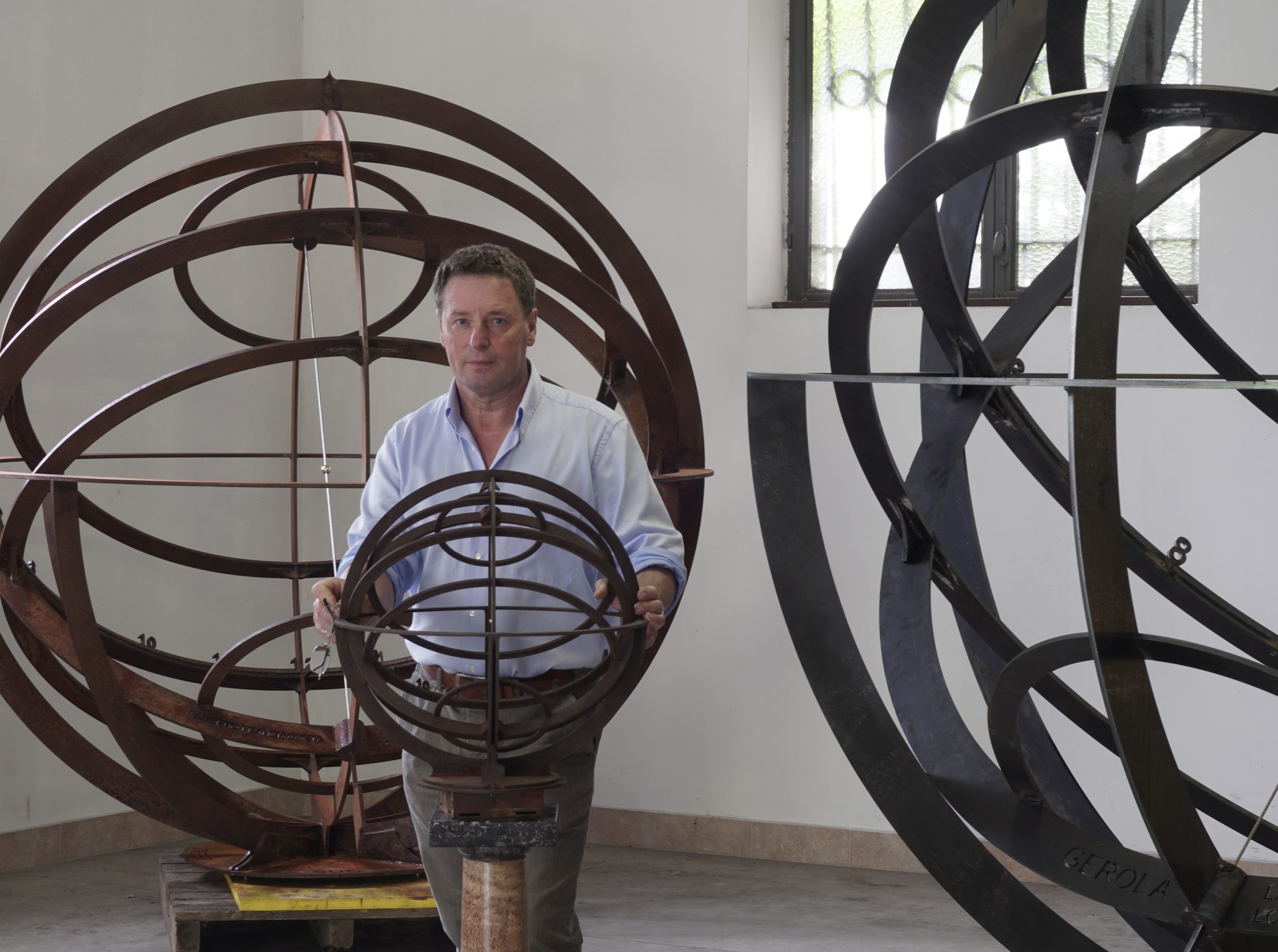
To the ancient sundials we can now add modern versions created for private or public gardens. Thus, not only horizontal or vertical sundials, but also sundials with double-faced or polyhedral dials in a variety of inclinations; dials made from transparent materials; dials inclined along the equatorial or polar plane; sundials built on armillary spheres of every type and size; as well as spherical, concave or convex dials. In short, new instruments and multiple typologies, differing mainly in the plane on which they are constructed, the type of gnomon employed, and the chosen methods for projecting the shadow and reading sunlight.

The contemporary use of sundials—although these instruments still mark time with an accuracy of up to a minute—goes far beyond their ancient practical purpose. Beyond their purely decorative aspect, their charm lies in the history of knowledge that has shaped both our development and theirs. When skilfully crafted, their dials are a mathematical projection of the celestial sphere, and the gnomon’s shadow reveals on the dial the Sun’s precise movement across the sky.

Why Install a Sundial in Your Garden Today
The extraordinary garden sundials deserve a special mention. Extremely versatile and elegant, they can also be used to lend prestige to corporate headquarters or a representative venue; they may be placed at an entrance, at the centre of a maze, or at the heart of a courtyard or lawn. In British gardens—and beyond—spaces so beloved for their connection with nature, beauty and personal wellbeing, the installation of a sundial brings the charm of the sky itself, inverted onto the dial like a mirror in which the precision of celestial mechanics reminds us of the value of our time and of our right to savour a more natural rhythm.

Contemporary sundials can therefore be positioned discreetly and strategically within gardens: among plants, along a flowered path to create a visual point of interest; or at the end of the path, to guide the gaze through perspective lines. They may be displayed prominently in the sunniest and most open part of a garden to capture attention; or hidden in the most secluded corner of a secret garden, like works of art to be safeguarded—revealing the secrets of time and sky only to a selected few.